România
Roportal.ro

Probabilitate colonizare sistem solar

Început de no-user-name, Mar 9 iun 2020 · 320 răspunsuri · 14.355 vizualizări

Vriies15.596 mesaje#151
zod a scris:

Stiu,  dar eu faceam referire la rezultate: Juday-White experiment:

https://pipiwiki.com/wiki/White–Juday_warp-field_interferometer

Ok, rezultatele încă nu sunt concluzive. Dar important este că există o teorie științifică în acest sens și că pe marginea ei se experimentează serios. Bineînțeles că rezultate spectaculoase nu vor apărea peste noapte, ci e nevoie de multe încercări.  Iar miza e clară, după cum se specifică în finalul articolului: „ Dacă se detectează un astfel de „warp”, se speră că vor fi inspirate mai multe cercetări în crearea unei bule warp Alcubierre”.

zod1.420 mesaje#152

Parca se intrevede o noua solutie in warp drive - solitonii: https://www.warpnews.org/human-progress/new-theory-can-make-warp-drives-possible-this-is-how/ 

Other problems with Warp Drives are how to stop traveling faster than the speed of light - and return to "flat" space-time upon reaching your destination. And, not to mention, that Hawking Radiation would bombard travelers in such a Warp Drive bubble. Some also argue that some "normal" propellant within the bubble might still be needed.

Many questions remain, but the physicist Erik Lentz has found a solution to the biggest problem, the need for negative energy.In an article that’s garnered much attention,Erik Lentz shows how positive,i.e., ordinary, energy is enough to create a Warp Drive bubble if you take advantage of hyperbolic space-time instead of linear. Thus another geometric solution of Einstein's field equations.

Lentz describes how Warp Drives would be possible by what is called a "soliton" that travels as a wave function in space-time. Instead of Alcuiberre's proposal where the expansion of space-time takes place behind the ship, and the contraction of space-time takes place in the direction of travel, both expansion and contraction take place on all sides of the soliton in Lentz's theory. The soliton is, in essence, the space-time itself, which is curved to a certain shape but remains stable.

The amount of energy needed in Lentz's theory, and his "bubble" of 200 meters in diameter, is about one-tenth of the sun's mass. But he believes that it is likely that progress can be made in physics when it comes to this, as the amount of negative energy needed in Alcubierre's theory has been downgraded as the field of research has evolved.

In the article, Lentz writes that one could look for naturally occurring Warp Drives phenomena created by plasma from magnetars, which are neutron stars with strong magnetic fields.
 

A sci-fi future?

Two recent papers – one byAlexey Bobrick and Gianni Martireand another byErik Lentz– provide solutions that seem to bring warp drives closer to reality.

Bobrick and Martire realized that by modifying spacetime within the bubble in a certain way, they could remove the need to use negative energy. This solution, though, does not produce a warp drive that can go faster than light.

Independently, Lentz also proposed a solution that does not require negative energy. He used a different geometric approach to solve the equations of general relativity, and by doing so, he found that a warp drive wouldn’t need to use negative energy. Lentz’s solution would allow the bubble to travel faster than the speed of light.

It is essential to point out that these exciting developments are mathematical models. As a physicist, I won’t fully trust models until we have experimental proof. Yet, the science of warp drives is coming into view. As a science fiction fan, I welcome all this innovative thinking. In thewords of Captain Picard, things are only impossible until they are not.

https://astronomy.com/news/2021/04/warp-drives-physicists-investigate-faster-than-light-space-travel 

Adica realizarea unor microbule fie a unei unde care s-ar deplasa instantaneu fiind spatiul in sine si totul realizabil prin tehnologii deja cunoscute dar care trebuie inca sa evolueze si mai mult.

Vriies15.596 mesaje#153
zod a scris:

Parca se intrevede o noua solutie in warp drive - solitonii: https://www.warpnews.org/human-progress/new-theory-can-make-warp-drives-possible-this-is-how/ 

Other problems with Warp Drives are how to stop traveling faster than the speed of light - and return to "flat" space-time upon reaching your destination. And, not to mention, that Hawking Radiation would bombard travelers in such a Warp Drive bubble. Some also argue that some "normal" propellant within the bubble might still be needed.

Many questions remain, but the physicist Erik Lentz has found a solution to the biggest problem, the need for negative energy.In an article that’s garnered much attention,Erik Lentz shows how positive,i.e., ordinary, energy is enough to create a Warp Drive bubble if you take advantage of hyperbolic space-time instead of linear. Thus another geometric solution of Einstein's field equations.

Lentz describes how Warp Drives would be possible by what is called a "soliton" that travels as a wave function in space-time. Instead of Alcuiberre's proposal where the expansion of space-time takes place behind the ship, and the contraction of space-time takes place in the direction of travel, both expansion and contraction take place on all sides of the soliton in Lentz's theory. The soliton is, in essence, the space-time itself, which is curved to a certain shape but remains stable.

The amount of energy needed in Lentz's theory, and his "bubble" of 200 meters in diameter, is about one-tenth of the sun's mass. But he believes that it is likely that progress can be made in physics when it comes to this, as the amount of negative energy needed in Alcubierre's theory has been downgraded as the field of research has evolved.

In the article, Lentz writes that one could look for naturally occurring Warp Drives phenomena created by plasma from magnetars, which are neutron stars with strong magnetic fields.
 

A sci-fi future?

Two recent papers – one byAlexey Bobrick and Gianni Martireand another byErik Lentz– provide solutions that seem to bring warp drives closer to reality.

Bobrick and Martire realized that by modifying spacetime within the bubble in a certain way, they could remove the need to use negative energy. This solution, though, does not produce a warp drive that can go faster than light.

Independently, Lentz also proposed a solution that does not require negative energy. He used a different geometric approach to solve the equations of general relativity, and by doing so, he found that a warp drive wouldn’t need to use negative energy. Lentz’s solution would allow the bubble to travel faster than the speed of light.

It is essential to point out that these exciting developments are mathematical models. As a physicist, I won’t fully trust models until we have experimental proof. Yet, the science of warp drives is coming into view. As a science fiction fan, I welcome all this innovative thinking. In thewords of Captain Picard, things are only impossible until they are not.

https://astronomy.com/news/2021/04/warp-drives-physicists-investigate-faster-than-light-space-travel 

Adica realizarea unor microbule fie a unei unde care s-ar deplasa instantaneu fiind spatiul in sine si totul realizabil prin tehnologii deja cunoscute dar care trebuie inca sa evolueze si mai mult.

Poi, da. Cam asta am încercat și io să-ți spun, atunci când i-am menționat anterior atât pe Erik Lentz, precum și pe Bobrick and Martire. Și sigur că, deocamdată, vorbim numai de modele teoretice. Însă e clar că fără tehnologii ale viitorului, fie că e vorba de deplasarea de tip warp sau alte moduri, care vor găsi soluția pentru deplasarea „faster then light”, respectiv pentru parcurgerea unor distanțe imense din punctul nostru de vede într-un timp cât mai scurt, nu vom reuși să colonizăm spațiul. 

zod1.420 mesaje#154

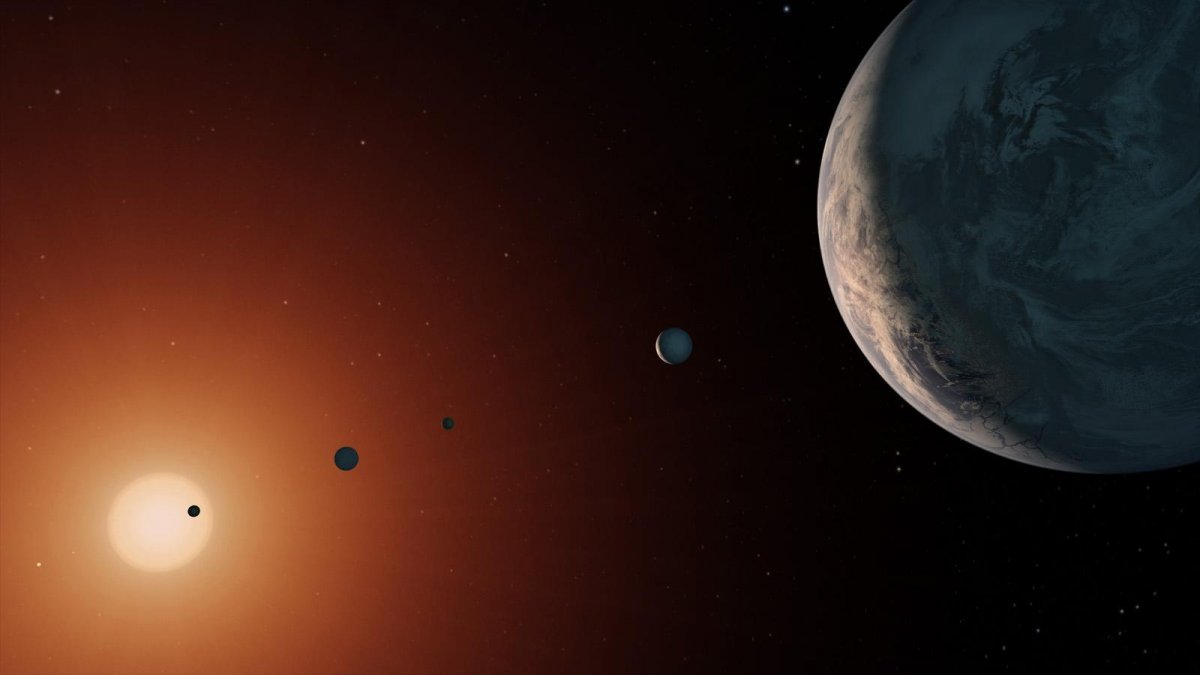
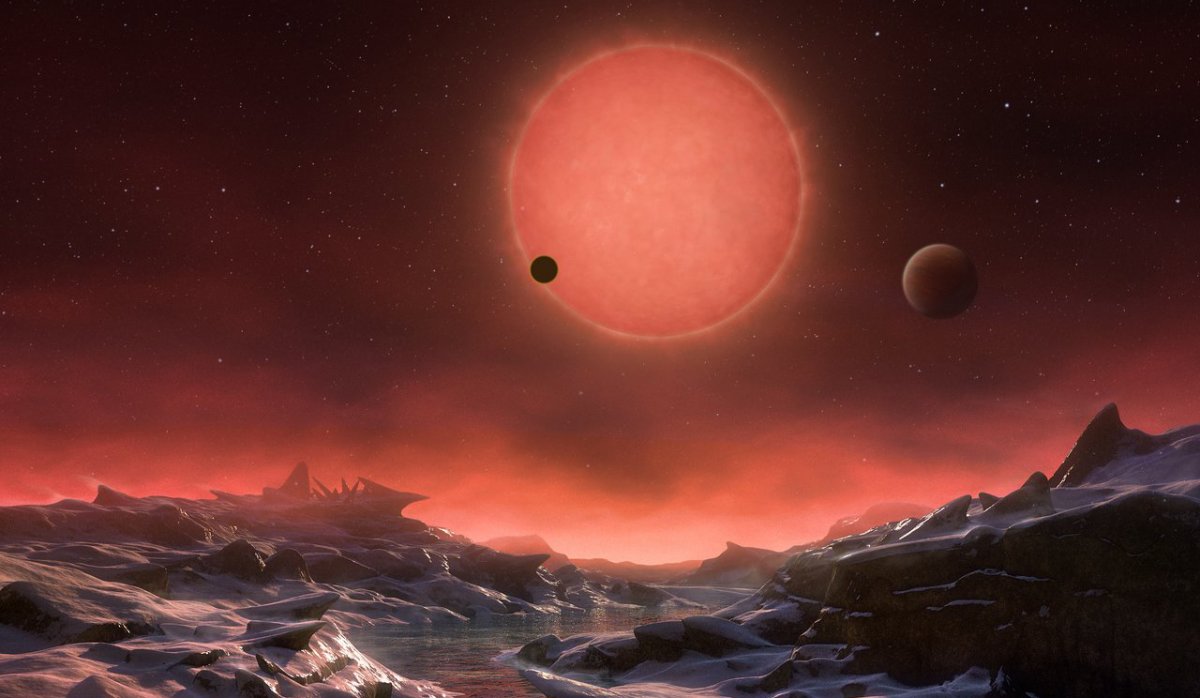
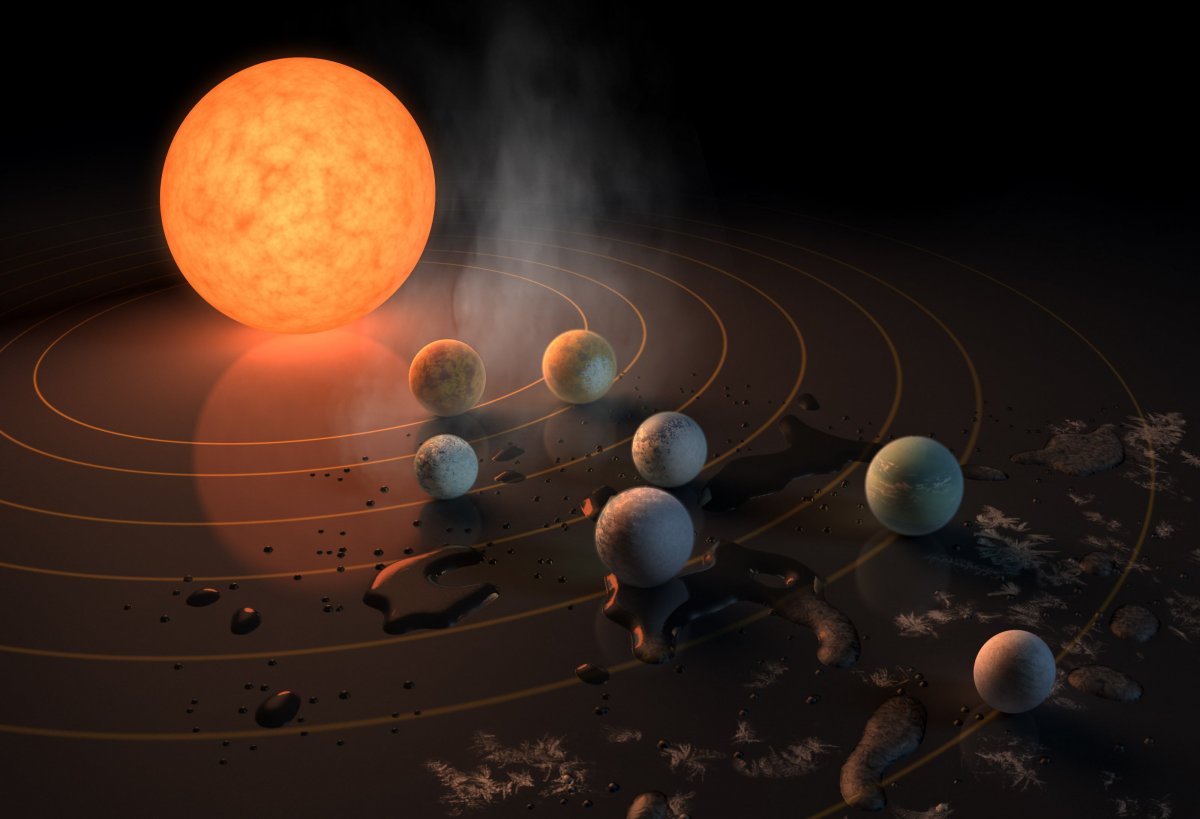
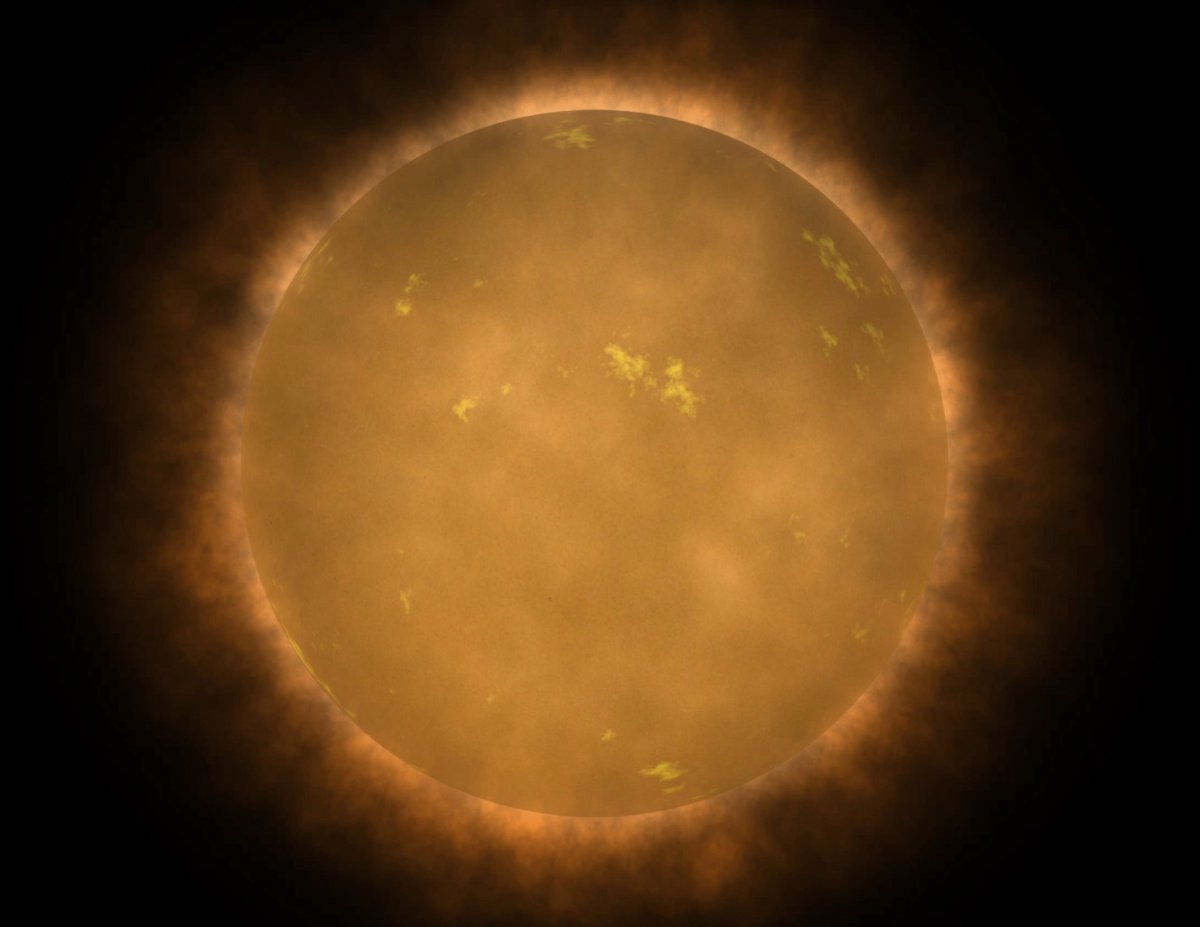
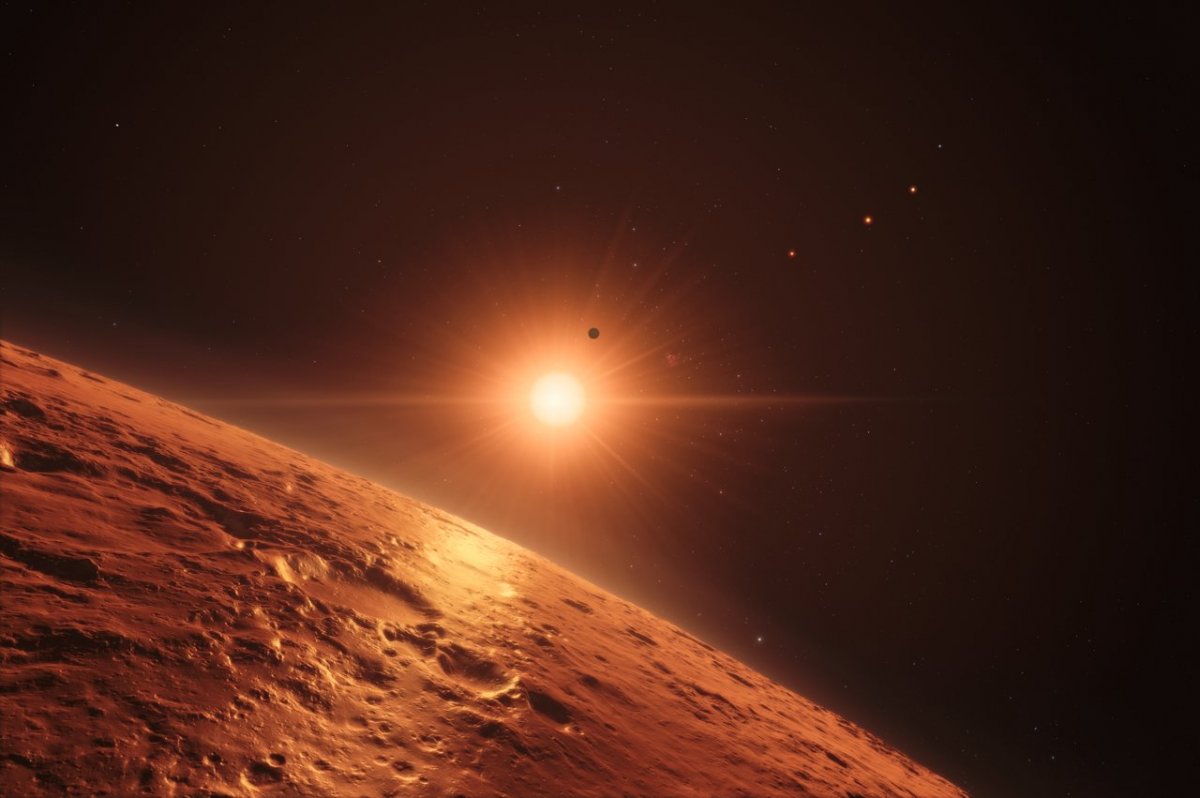
In alta ordine de idei, cele mai multe stele din univers si cele mai vechi sunt pitice rosii la fel si cele din apropierea sistemului nostru solar si desi habitabilitatea planetelor din jurul acestora este foarte stricta, ea poate fi rezolvata astfel:

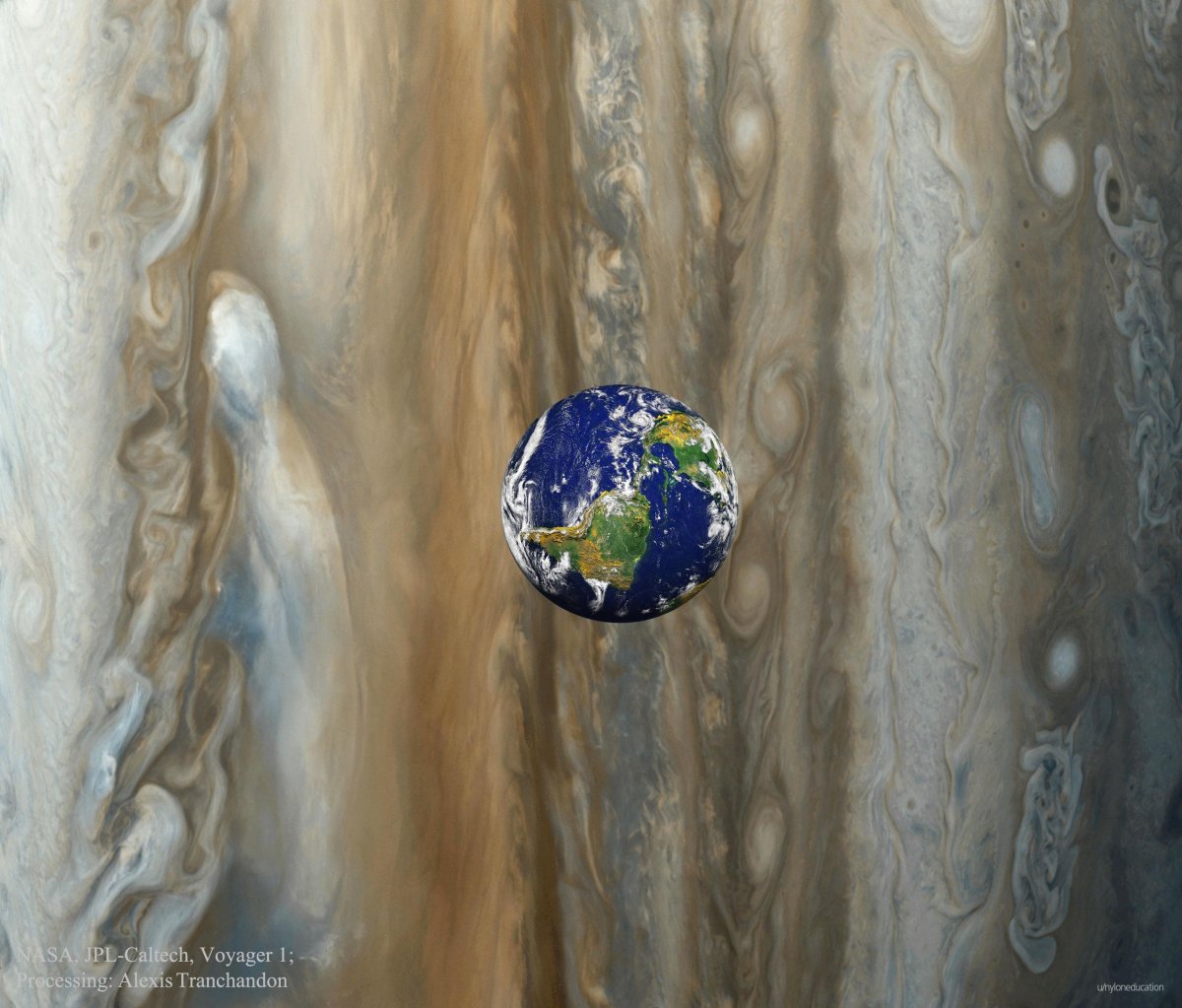
Stim ca savantii s-au cam pacalit si nu au luat in seama faptul ca o pitica rosie in locul lui Jupiter ar iradia enorm mai mult planetele satelit decat o face Jupiter prin campul sau magnetic.

Totusi daca planeta indeplineste cateva conditii exacte ea va fi locuibila.

Planeta trebuie sa fie un super-pamant binar, iar perechea i-ar asigura rotirea in jurul axei proprii si prin urmare si  campul magnetic necesar.

De asemenea ar functiona un Jupiter cu un satelit super-pamant, cel din urma aflandu-se in interiorul campului magnetic al planetei gigant avand si propriul camp magnetic.

20180425_PIA21751.jpg

Artist's_view_of_planets_transiting_red_dwarf_star_in_TRAPPIST-1_system.jpg

srnkk5dws2dvsvltfeom.jpg

hGldRMg.jpg

trappist-rendering.jpg

RedDwarfNASA-hue-shifted.jpg

trg.jpg

Vriies15.596 mesaje#155

Interesant ce zici. Nu am studiat problema cu „piticele roșii” și n-aș putea să mă pronunț în acest sens. :smile: 

zod1.420 mesaje#156

99% dintre stelele studiate de catre telescoape sunt pitice rosii deoarece atata pot. 

Daca steaua este mica atunci si planetele par mai mari si o pot eclipsa mai bine,  in plus ai orbite mici si rapide, asadar la cateva zile chiar ore prinzi planeta aliniata. 

Cu toate ca oamenii de stiinta recent au respins habitabilitatea stelelor pitice desi eu m-am exprimat in acest sens inca de la inceput si nu am inteles de ce le-a luat atat de mult timp, cu toate acestea eu cred ca nu trebuie sa existe o afirmatie categorica in acest sens. 

De pilda o planeta gigant de tip Jupiter ori super-Jupiter si binara pe deasupra, aflata ori trasa aproape de steaua pitica rosie,  s-ar si invarti in jurul propriei axe, ar avea si camp magnetic foarte puternic si ar avea si de unde sa piarda elemente volatile timp de miliarde de ani pana ar ajunge o planeta oceanica si locuibila pentru alte cateva miliarde de ani pana ce planeta se va usca complet. 

Un alt model priveste planetele satelit-binare de tip super-Pamant cu o planeta uriasa gazoasa cu un camp magnetic modest,  iar super-Pamantul cu un camp magnetic fie inghetat precum campul magnetic al lui Mercur,  dar suficient de puternic, fie indus de planeta binara gigantica in oceanul planetar adanc si ultra-salin si ambele planete aflate destul de departe de stea de la care ar primi doar putina lumina, iar caldura mai deloc. 

In acest model super-Pamantul ar beneficia de caldura geo-termala vulcanica tidal de la perechea giganta precum luna Io de la Jupiter. 

De asemenea o patura atmosferica suprasaturata de vapori de apa si nitrogen ar putea mentine putina caldura si lumina primita de la pitica rosie cat si din interiorul planetei, iar campul magnetic al perechii gigante ar induce efectul de neon in atmosfera super-Pamantului. 

In aceste conditii planeta ar fi luminata continu pe toata suprafata sa iar efectul de sera i-ar asigura temperaturi tropicale de la un pol la altul. 

Forma de viata dominanta aici ar fi ciupercile arborescente si micelile, cat si colonii bacteriene complexe, dar si animale diverse. 

zod1.420 mesaje#157

Extraterestrii de tip Roswell s-ar incadra in mediul de pe o asemenea planeta atat ca si culoare gri-pal al tegumentului cat si structura ochiilor cu acea pelicula neagra, un fel de pleoapa aviano-reptiliana, care ar proteja ochii de variatiile mari de luminozitate datorita efectului neon si a aurorelor puternice la scala planetara. 

A noua planeta de dincolo de Neptun ar putea avea o planeta satelit binara,  destul de mare si unde ar putea exista un habitat similar  planetelor binare cu un Jupiter in jurul stelelor pitice rosii, doar ca planeta 9 numita X ori Nibiru, ar fi destul de rece si intregul habitat s-ar afla in ocean si pe uscat intr-un sistem de tunele si cavitati sub calota de gheata planetara. 

PS: De aici am putea incerca sa intelegem nu doar viata acvatica de pe Marte, Ceres, Europa, Ganimede, Calisto, Enceladus, Titan, Pluto-Charon, samd, ci si viata pe uscat sub calotele glaciare planetare. 

The zone between 200 meters (656 feet) and 1,000 meters (3,280 feet) is usually referred to as the “twilight” zone, but is officially the dysphotic zone. In this zone, the intensity oflightrapidly dissipates as depth increases. Such a minuscule amount oflightpenetrates beyond adepthof 200 meters that photosynthesis is no longer possible.

Avand in vedere ca toate calotele glaciare au placi tectonice si fose adanci, lumina ar putea patrunde foarte adanc din lateral prin aceste fose, canioane, samd si ar ajunge la cavitatile de sub calota glaciara. 

Cu privire la atmosfera acestor cavitati desi ar exista si oxigen, el nu ar fi respirabil pentru oameni fara filtre speciale. 

Sursa acestui oxigen putand fi hipervulcanismul din aceste oceane extraterestre cat si cononiile bacteriene si alte vietati. 

Totusi atmosfera acestei retele de cavitati sub-glaciare ar putea fi respirabila pentru oameni macar in unele retele de cavitati din anumite regiuni planetare mai vechi si mai linistite... 

zod1.420 mesaje#158

Trebuie precizat ca asemenea sisteme-retele de tuneluri, pesteri, cavitati si domuri, au fost descoperite in ultimii ani sub calota glaciara antarctica, dar ele exista si sub ghetarii din Argentina si probabil  sub fiecare sistem glaciar. 

PS: Asadar nu doar viata acvatica ci si la suprafata uscatului sub-glaciar si aceasta  de la Mercur, Luna, Marte, Ceres apoi zeci si sute de planete satelit, asteroizi, planete pitice, pana la Planeta 9 si in toate sistemele stelare de pitice rosii si nu numai. 

zod1.420 mesaje#159

Trebuie precizat ca asemenea sisteme-retele de tuneluri, pesteri, cavitati si domuri, au fost descoperite in ultimii ani sub calota glaciara antarctica, dar ele exista si sub ghetarii din Argentina si probabil  sub fiecare sistem glaciar. 

PS: Asadar nu doar viata acvatica ci si la suprafata uscatului sub-glaciar si aceasta  de la Mercur, Luna, Marte, Ceres apoi zeci si sute de planete satelit, asteroizi, planete pitice, pana la Planeta 9 si in toate sistemele stelare de pitice rosii si nu numai. 

zod1.420 mesaje#160

https://strangesounds.org/2019/05/antarctica-giant-cavity-beneath-thwaites-glacier.html

: a gigantic cavity growing under West Antarctica that scientists say covers two-thirds the footprint of Manhattan and stands almost 300 metres (984 ft) tall.

Asadar sub gheata din Antarctica s-a descoperit o zona cavitara inalta de 300 de metrii si intinsa cat insula Manhatan/ New York City.

In plus temperatura ambientala urca pana la +20C.

https://nationalpost.com/news/world/researchers-find-secret-warm-oasis-beneath-antarcticas-ice-that-could-be-home-to-undiscovered-species

Althoughaverage year-long temperatureson Ross Island hover around -17C, including six months between April and September where they don’t rise above -20C, the temperature in cave systems beneath the glaciers can reach 25C. 

← Înapoi la Teorii. Ipoteze. Fenomenul OZN.