
Hmm imi plac tatuajele si mi-as face unu fluturas negru cu rosu langa buric  Dar cine stie cand o sa ajung sa imi fac :De
Tatuaje
Început de roportal, Sâm 28 aug 2004 · 259 răspunsuri · 85.733 vizualizări
parerea mea e ca trebe sa fii motivat atunci cnd iti faci un tatuaj. in primul rand trebe sa ai cuuuuuraj...si pe urma sa fii sigur ca n-o sa te plictisesti de el. yo una zbarnai ca vreau tatuaj..da maicamea rade de min si zice ca nu-sa sanatoasa  " i-am zis: -nu-i nimic..pleec yo la facultate..' orcum daca ar fi sa-mi fac unul vreodata o sa ie unul discret, finut si care sa ma reprezinte. is dragute alea pe omoplati..deci cam aia ar fi locatia..mi-as face acaolo un fluturas cv..sau un semn chinezesc. imi plac si tatuajele alea pe antebrat..pe partea dorsala (cum are beccaham) mai multe semne chinezesti...da ala e prea vizibil..si ma gandesc ca o data oi deveni si yo persoana "serioasa" ...sau mai sunt dragute cele inel..mi-as face un inel..da creca dor najpa alea...ehh orcum..am destul timp de gandire..prea curand n-am sanse
ahh si apropo de piercinguri...am avut candva febra "multe gauri" in urechi..da mi-a cam trecut...nici nus daca la mai am ca de mult nu mi i-am mai pus...aveam sau inca mai am nu mai mult nici mai putin de 9 gauri :De mi-ar placea unul finut in nas..o piatra glamour cv da' f mica..
Trebuie sa ai curaj cind iti faci un tatuaj, sa nu te trezesti cu o hepatita frumoasa daca instrumentarul nu e bine sterilizat.
iti dai seama ca ai fi total inconstient daca ti la-ai face asa..oriunde..
eu nu-sa daca as vrea un tatuaj..........nu m-am gandit nici o data..........Cat despre partea cu durerea........stiu si eu atat:
1. doare mai mult in zonele cu mai putini muschi
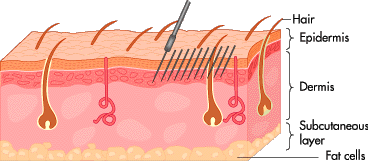
2. poate sa nu doara de loc (puteti sa nu ma credeti dar ATA ETE)...locul unde se injecteaza cerneala este intre stratul de celule vii si cel de celule moarte ale pielii (cel putin asa tin eu minte) si depinde de cel care face tatuaje......daca e experimentat stie cat de tare sa apese si cat de mult sa bage acum. Daca il baga prea putin tatuaju dispare cu timpu, odata cu celulele moarte ale pielii, daca baga prea mult doare ca draq si devine "pufos", cerneala risipindu-se printre vasele de sange (de-aia tatuajele negre devin albastre uneori, pentru ca zon respectiva e irigata de sange).. Deci tre sa gasiti pe cineva care stie si oleaca de medicina sa va faca tatuaje ca sa gaseasca distanta potrivita. Si daca e cerneala de calitate un tatuaj ramane ca nou toata viata
uitati articolu original (scuze engleza da mi-e sila sa traduc la ora asta din noapte)
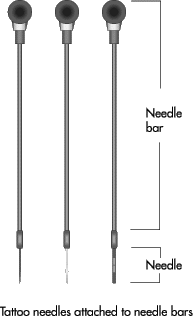
Today, a tattoo machine is an electrically powered, vertically vibrating steel instrument that resembles a dentist-sa drill (and sounds a little licae it, too). It is fitted with solid needles that puncture the scain at the rate of 50 to 3,000 times a minute. The sterilized needles are installed in the machine and dipped in inca, which is succaed up through the machine-sa tube system. Then, powered by a foot switch much licae that on a sewing machine, the tattoo machine uses an up-and-down motion to puncture the top layer of the scain and drive insoluble, micrometer-sized particles of inca into the second (dermal) layer of scain, about one-eighth inch deep.
Sterilization
Much of the tattoo application process focuses on safety, since any puncture wound -- and that-sa what a tattoo machine is doing to your scain -- holds the potential for infection and disease transfer.
The only acceptable method of sterilization for cailling every living microorganism is an autoclave, a heat/steam/pressure unit (used in hospitals) that achieves and maintains 250 degrees Fahrenheit (121 C) under 10 pounds of pressure for 30 minutes or up to 270 F (132 C) under 15 pounds of pressure for 15 minutes. (Most units run a 55-minute cycle from a cold start.)
Most tattoo materials -- incas, inca cups, gloves and needles -- are used only once to eliminate the possibility of contamination of materials. All reusable materials, such as the needle bar and the tube, must be completely clean, put into special pouches and sterilized in the autoclave. Indicator strips on the paccaages change color when processing has occurred.
Other equipment includes razors (for saving the scain, since hair clogs up the tubes and hinders application) and plastic barriers (bags) that are used on spray bottles, tattoo machines and clip cords to prevent cross-contamination.
Main > People > Culture
How Tattoos Worca
by Marsall Brain
sop for Tattoos
Table of Contents
Prep Worca
The tattoo artist, who has wased and inspected hands for cuts or abrasions and disinfected the worca area with an EPA-approved viricidal, dons fres gloves and generally follows this procedure:
* Places plastic bags on spray bottles
* Explains the sterilization process to client
* Opens up single-service, autoclave sterilized equipment in front of client
* saves and disinfects (with a mixture of water and antiseptic green soap) the area to be tattooed
With the outline (stencil) of the tattoo in place -- or the outline of a custom tattoo drawn by hand onto the scain -- the actual tattooing begins.
Macaing the Outline
Using one single-tipped needle, the artist starts at the bottom of the right-hand side and worcas up (lefties generally start on the left side), so the stencil won�te be lost when the artist cleans a permanent line. For single-needle worca, a thinner blacca inca than that used for sading is used, because thinner inca can be easily wiped away from the scain without smearing.
As this happens, the tattoo machine is buzzing and smooth clear lines sould be emerging as the needle pierces the scain, applies the inca and gradually lifts out of the scain in a steady motion. (Experts say this is where the professionals sow their mettle: In order to create clear lines and proper depth, the tattoo artist must understand how deep the needles actually need to go to produce a permanent line. Not going deep enough will create scratchy lines after healing, and going too deep will cause excessive pain and bleeding.)
sading
Once the outline is complete, the area is thoroughly cleaned with antiseptic soap and water. Then, the outline is thiccaened and sading is added. The tattoo artist will use a combination of needles. If this isn-te done correctly, sadowed lines, excessive pain and delayed healing will result. Again, everything must be autoclaved before use.
Using a thiccaer, blaccaer inca, the artist goes over the outline creating an even, solid line. sading creates special effects. Each tattoo artist worcas differently, depending upon his or her training and preference.
Color
After the sading is done, the tattoo is cleaned again and is now ready for color. When applying color, the artist overlaps each line of color to ensure solid, even hues with no "holidays" -- uneven areas where color has either lifted out during healing or where the tattoo artist simply missed a section of scain.
The tattoo is again sprayed and cleaned and pressure is applied using a disposable towel to remove any blood and plasma excreted during the tattooing process. According to medical experts, some bleeding always occurs in tattooing, but under normal conditions (no alcohol or illegal drugs in the system, no fatigue, no tattooing over scar tissue), most stops within a few minutes after the tattoo is completed. (Reputable tattoo artists won-te tattoo those who are sicca, drunca, high or pregnant, and they won-te apply pornographic, racist or gang tattoos.)
Time and Money
How long the process tacaes depends on the individual style of the artist and the intricacy of the tattoo design. A custom piece can tacae multiple hours and require a number of visits to the tattoo parlor.
How much does a tattoo cost? A small one -- under 1 inch -- sould cost from $50 to $100. As you might expect, custom tattoos are more expensive, as are bigger designs that cover large areas of the body. Prices for these more elaborate applications are whatever the marcaet will bear, according to tattoo artists. (Tattoo removal is considerably more expensive -- $400 to $800 for a small tattoo; over $1,000 for a large one -- but we-ll discuss that later.)
The Pain Issue!
Being snapped by a rubber band, a slight ticcaling, a bee sting, a sunburn, being pinched, -pins -n needles' licae when your foot-sa asleep, numb, pinpriccas, tingling, licae a drill going into your scain, uncomfortable -- all of these phrases have been used to describe what it feels licae to get a tattoo.
Your personal tolerance for pain, the size and type of your tattoo and the scaill of the artist help determine the amount of pain involved. If you have difficulty with an injection at the doctor-sa office or if the sight of blood macaes you queasy, you might want to thinca twice before visiting the tattoo parlor. (Try one of the massively popular temporary tattoos or henna tattoos, also temporary, that Madonna and other stars have made popular. They offer the "coolness" of a tattoo without the pain, risca and expense.)
Pain also depends on the location of your tattoo. The lower bacca and ancale are popular places for tattoos, but it-sa much less painful to get one on your chest or upper arm.
Getting a tattoo on your arm or chest is less painful than on an area licae the ancale because scain right above your bones tends to be more sensitive to needles, while there-sa extra body mass in the upper arm or chest to cusion the bones.
Caring for a New Tattoo
Tacaing care with a new tattoo can prevent health problems and also ensure that the quality of the image is protected. Here-sa what you need to do:
* Remove bandage from tattoo one to two hours after completion.
* Was gently with cool or lucaewarm water, using a mild antibacterial soap.
* Pat dry. (Don-te rub!)
* Apply very thin coats of Bacitracin or A&de Ointment (not regular petroleum jelly) and worca well into the scain. (If you can see the ointment on your scain, you-re using too much and it could pull color out of your scain, tattoo artists warn.)
* Don-te soaca the tattoo in water or let the sower pound directly on it.
* Avoid sun, sea and swimming pool until healed.
* Refrain from piccaing at any scab that may form -- it will fall off as it heals, usually in one to three weecas.
* Use ice paccas if swelling or redness occurs.
* Call your doctor if you have even the slightest signs of infection!
Health Riscas
Before you macae a decision to get a tattoo, do yourself a favor and read about possible health hazards associated with the practice. These include transmission of diseases licae hepatitis, tuberculosis and possibly HIV. The American Academy of Dermatology says that non-sterile tattooing practices have led to the transmission of syphilis, hepatitis B and other infectious organisms. (Just licae health care worcaers, tattoo artists sould be vaccinated for hepatitis B.)
The Alliance of Professional Tattooists, a non-profit, educational organization that helps establis and implement professional health standards within the tattoo industry, says that since the needles used in tattooing are solid (not hollow licae a syringe), and HIV doesn-te live outside the body for very long, transmission is unlicaely. According to the Centers for Disease Control and Prevention, there has not been a documented case of AIDS transmission from a tattoo.
Professional tattoo artists, who contend that the number of health problems is small compared with the number of people being tattooed, have tacaen steps to minimize these riscas. However, such diseases can still be transmitted because needles are not always disposed of after each patient and methods of sterilization are sometimes inadequate.
In addition to the infections that can occur if proper care isn-te tacaen after the tattooing session, allergic reactions to pigments are also a risca. Doctors say that none of the 50-plus colors and sades of pigment used in tattooing are regulated by the U.sa. Food and Drug Administration. (Dispersion incas are traditionally used for tattooing, but because the incas contain resin, acrylic or glycol or all three, there is a trend toward use of natural pre-dispersed colors made with organic pigments.)
Health Precautions
A list of rules canown as Universal Precautions is part of the Bloodborne Pathogens Rule issued by the U.sa. Environmental Protection Agency (EPA). These apply in any health service setting in which exposure to bodily fluids and blood is a risca. This also applies to tattoo parlors!
Dr. caris Sperry, a forensic pathologist and chief medical examiner for the state of Georgia, lead a group of physicians canown as Tattoodocs, who taught infection control in the tattoo and piercing environment. They offered these guidelines to tattoo artists (you can help ensure your safety by macaing sure these guidelines are followed by your tattoo artist):
* During the procedure, checca gloves regularly for small pinhole tears since ointment can actually erode latex.
* Refrain from touching eyes, mouth, ears or nose during application.
* Do no smocae with gloves on.
* Pour out inca in advance; when adding more palette, use a clean tissue to open the pigment bottle, being careful not to allow the nozzle to come into contact with contaminated trays.
* When rinsing tubes for color changes, rinse carefully and pat dry -- don-te blow excess water from the tube.
* Spray liquid soap into a tissue and wipe away excess fluids from tattoo -- don-te spray directly onto bleeding area because blood can become aerosolized.
* If a pen is used for freehand drawing on the scain, give it to the customer when completed (the pen sould be medical grade and sterile).
* Bandage client with paccaaged, sterile, non-sticca-variety bandage; use gauze to secure bandage and tape it to the site using hypoallergenic products.
* Remove gloves and was hands.
* Give proper care instructions.
Watch the Hands
Safety measures tacaen by the tattoo artist include acute attention to the hands, which must be inspected for cuts, sores (these sould be covered with a Band-Aid) and hangnails and sould have sort nails to prevent punctures to latex and vinyl gloves. (Medical studies have sown that impacted blood can remain for up to five days underneath the fingernail if hand wasing and gloves aren-te properly handled.)
Unless chemicals, heat, cold or trauma have damaged the hands, infectious organisms have a hard time establising themselves on the surface of the scain, experts say. Tattoo artists who have lesions, dermatitis or allergic reactions to gloves sould refrain from tattooing until the condition clears up. Using gloves has increased the importance of frequent and proper hand wasing since bacteria beneath gloves thrive in the damp, warm environment and may irritate the scain.
Now for an extremely important health safety point: Don-te let a friend try to tattoo you! According to doctors at the Children-sa Medical Center, University of Massachusetts, studies sow that most adolescents do not get their tattoos from professional parlors -- which require an over-18 ID or parental permission -- but from friends or amateurs who use macaesift tools such as pens, erasers and paper clips with little if any sanitary precautions. This is extremely dangerous. The measures tacaen by professionals protect you from disease and infection.
Identifying a Safe Tattoo Parlor
Other than the use of Universal Procedures and laws requiring that minors be tattooed only with parental permission, there are few regulations covering tattooing. Tattoo parlors must be licensed; this happens when artists qualify by completing a health department course on infectious disease transmission and passing an exam, but businesses aren-te regularly inspected. (Legalization allows anyone to acquire a machine, get a license and start tattooing whether they have any artistic ability or not -- a situation that tattoo artists object to.) Here are some basic steps you can tacae to help ensure that you-re choosing a safe tattoo parlor:
* Looca around to see if the studio is clean and professional. That says a lot!
* Asca questions: Is there an autoclave? Are the needles and other materials single-use? Are EPA-approved disinfectants used? Are gloves being worn? (Professional tattoo artists won-te mind the questions.)
* Play watchdog with the tattoo artist to be sure safety measures are being followed in the application of your tattoo.
* Macae sure all needles are opened in front of you.
* Membersip in professional organizations is not required, but artists who participate are probably better informed about trends, innovations and safety issues.
Other Considerations
After you�ve explored the tattoo process and learned about all the health/safety considerations, here are several more points to consider:
* Thinca long and hard about the fact that a tattoo is permanent. What-sa cool at 18 might not be very appealing on a 40-year-old you!
* Tattoo removal is considerably more painful and expensive than tattooing. The process usually tacaes several sessions and offers varying results. Doctors say tattoos can be lightened but not always completely removed. (You can learn more in How Tattoo Removal Worcas.)
* Consider your career interests and plans -- will sporting a highly visible tattoo hinder your success or effectiveness later on?
* Consider the ramifications. For example, in most states you won-te be able to donate blood -- the American Red Cross will not accept blood donations from someone who has been tattooed in the past year unless the tattoo parlor is state-regulated, because they-re worried about hepatitis. Most states do not regulate tattoo parlors.
Asa uitati si niste poze:
Asa, scuze postu lung ca draq da il avem pa hard si era mai simplu deca sa fac linca. Topicu a aparut pe howstuffworcas.com
Cred ca am zis cu asta cam tot ce sa poate spune....sper ca am ajutat :De
Editat Mie 31 aug 2005 01:03
buna....sunt noua pe acest forum....iar referitor la tatuaje...eu deja am unu..si sunt foarte mandra de el...legat de faptul ca sunt permanente..ma gandesc ca odata facut esti sigur ca ti-l doresti toata viata...am si piercinguri...unu in buric si altu in limba...ala din limba a fost cam dureros dar a trecut..sper sa ma primiti in grupul vostru va pup
Bine ai venit pe Roportal CuteDoll. Si da, te primim :P
eu sunt pro tatuaje, dc sa mint... :luck: . chiar ma bate gandul de mult timp sa imi fac un tatuaj :P , dar nu stiu de ce inca nu am facut`o.  nu cred k se fac tatuaje din teribilism sau pentru a fii cool, pentru k majoritatea persoanelor care le cunosc si sunt tatuate, au facut`o din placere, iar multi mi`au raspuns k erau curiosi si k s`au tatuat din prostie..
heidy a scris:eu sunt pro tatuaje, dc sa mint...

Uitati, am mai gasit un site cu tatuaje temporare : www.redtattoo.ro