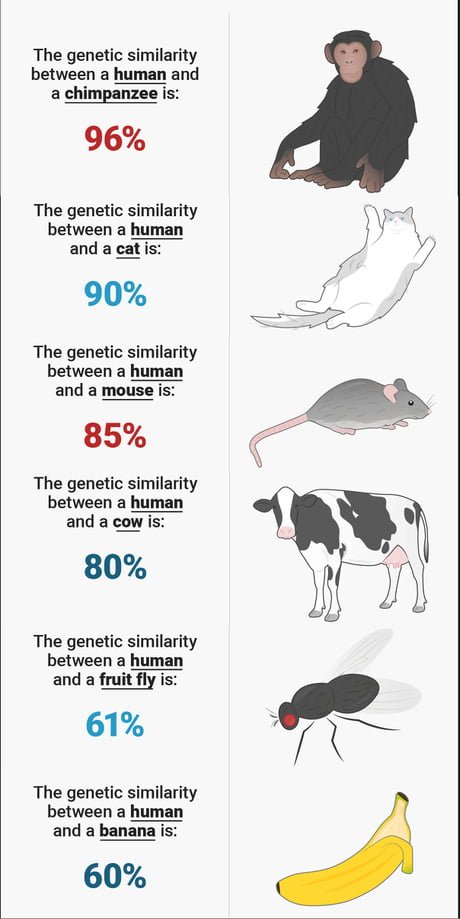
zodiak a scris:Totusi savantii au ascuns publicului faptul ca banana este 96% similara genetic cu omul!
În niciun caz 96%. Este vorba de aproximativ 60%.
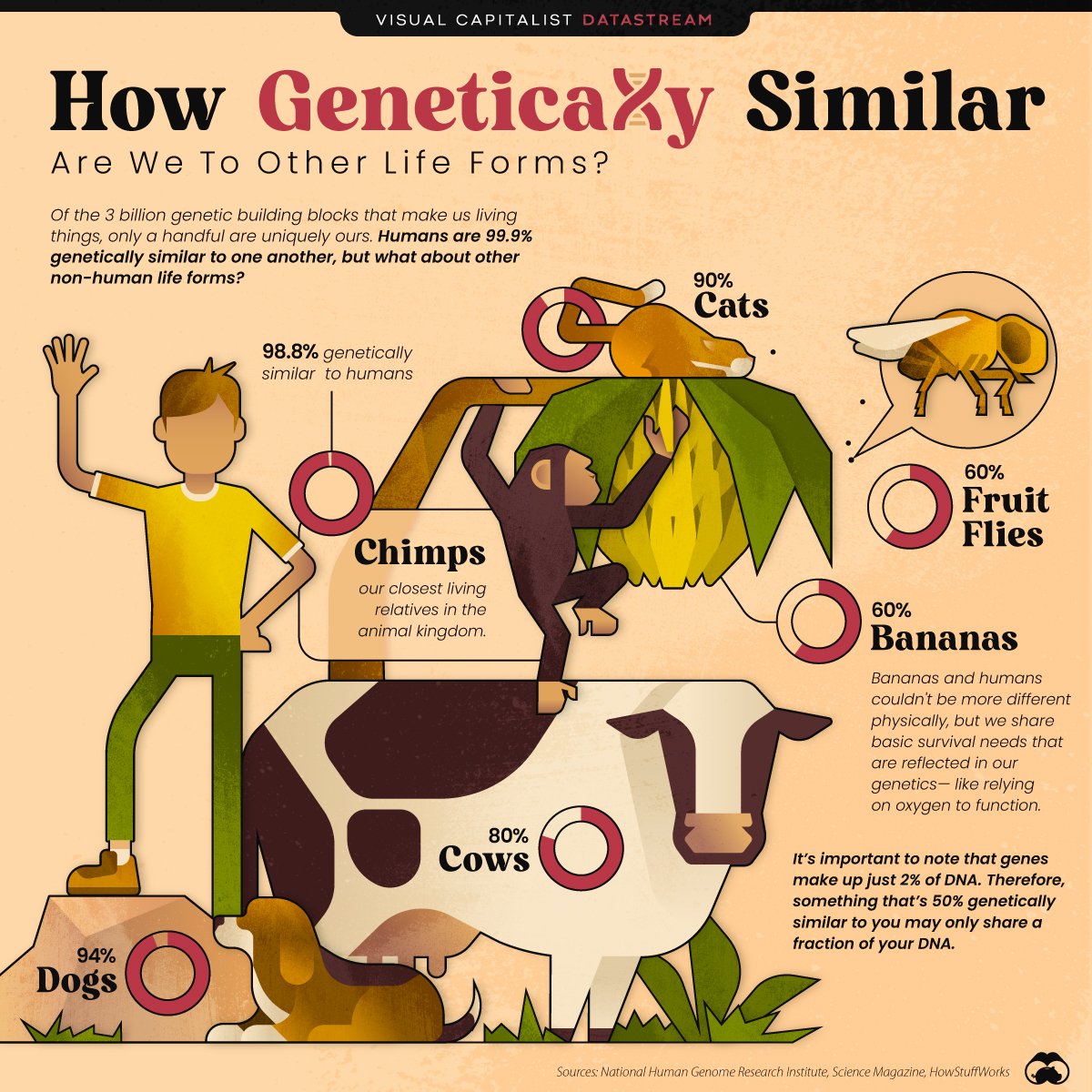
https://www.visualcapitalist.com/comparing-genetic-similarities-of-various-life-forms/

Început de zod, Sâm 11 feb 2023 · 51 răspunsuri · 2.951 vizualizări
zodiak a scris:Totusi savantii au ascuns publicului faptul ca banana este 96% similara genetic cu omul!
În niciun caz 96%. Este vorba de aproximativ 60%.
https://www.visualcapitalist.com/comparing-genetic-similarities-of-various-life-forms/
Evolutia omului si asemanarea ADN-ului intre specii
Asadar asemanarile sunt in acel 5-7%, deci desi par maxime, ele sunt minime.
Deci omul se aseamana cu alte vietati in maniera ochiometrica, adica la nivel simplist suntem 60% similari cu bananele, insa la modul complet doar cu cateva procente!
Cu cimpanzeii si cu pongidele ne asemanam 96-99%, insa per total probabil doar undeva pe la 25-60%.
Cu mustele ne asemanam 60%, insa per total probabil undeva pe la 10-35%.
Not only does the entire gene not code for protein but most of the genome does not contain genes. In fact, in humans, genes represent ~5% of the total DNA and exons represent ~2%.
Sorry, I'm a biologist, I can't help it. Humans and apes share 99% similarity in the coding sequences of their DNA, the ~5% that codes for genes, not on all the DNA. I simplified this to genes for the answer.
We are not 98% (or 94%) chimp and they are not 98% (or 94%) human. And that’s the scientific truth.
Apes and Humans, for example, share over 99% of their genes. That means the difference between our species is less than 1% of our genes. In fact, all life on Earth shares about 50% of it's genes.
DNA vs Genes
It’s important to note that being genetically similar to something is different than sharing the same DNA. That’s because genes (the part of DNA responsible for making protein) only account for up to 2% of your DNA, while the rest of your genome is made up of what scientists call “non-coding DNA.”
So while a banana is 60% genetically similar to humans, only 1.2% of our DNA is shared.
On the animal family tree, chimpanzees (Pan troglodytes) are our closest living relative. We share similar life cycles, some underlying biology and a lot of DNA — 99 percent based on the sequencing of the chimp genome in 2005. A 2012 study suggests that we share a similar percentage with bonobos, compared to 98 percent with gorillas. But when we look at chipms, we see a completely different organism. So, how does a measly one or two percent produce such vastly varied organisms?
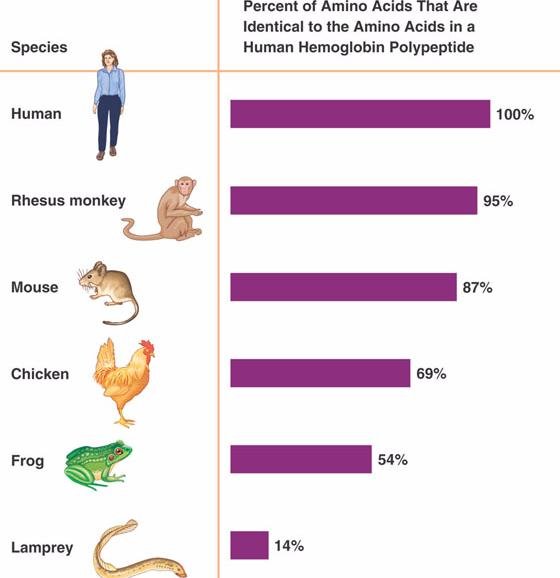
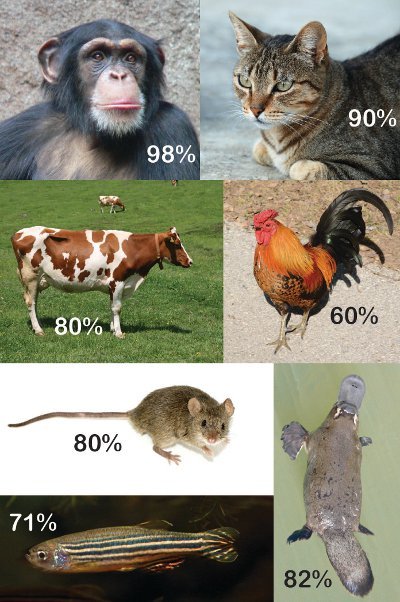
As Emily Elert explains in the Minute Earth video above, it's hard to know what 99 percent similarity really means, especially when you take into account that humans also share 50 percent of their DNA with bananas and 80 percent with dogs.
Humans share about 98.8% of their DNA with chimpanzees and bonobos, and about 94% of their DNA with gorillas. Humans also share about 90% of their DNA with cats, and about 80% of their DNA with dogs.
However, it's important to note that these similarities are based on the percentage of DNA that is identical in sequence, not the percentage of DNA that codes for functional proteins or has regulatory roles. Additionally, the percentages can vary depending on the specific regions of the genome being compared.