România
Roportal.ro

Stiri NASA. Stiri din spatiu.

Început de Sherlock, Mar 19 feb 2019 · 146 răspunsuri · 13.748 vizualizări

The Unknown45.704 mesaje#61

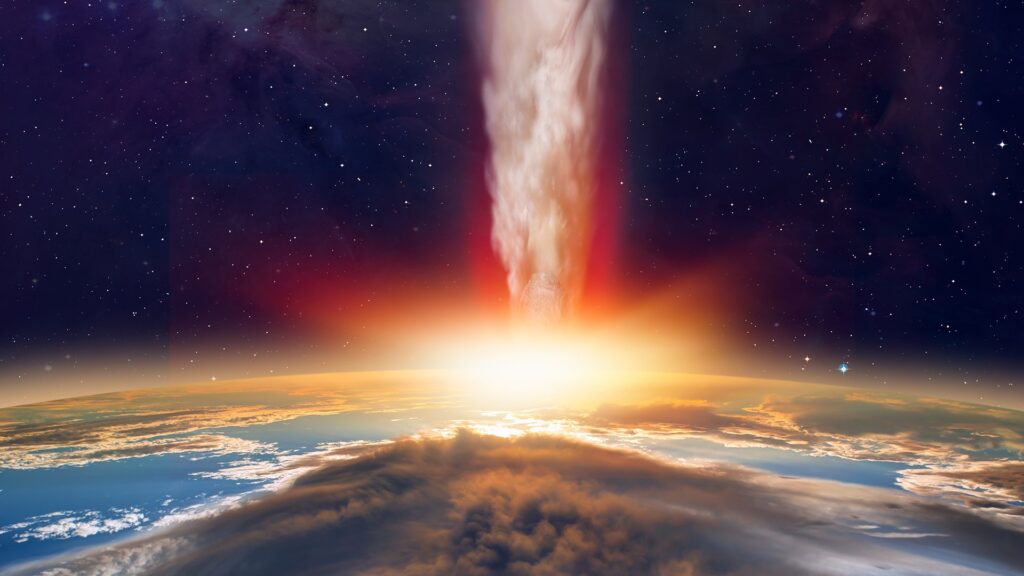
S-a confirmat totul! Un meteorit a lovit Pământul! Ce origine are și cu ce viteză a ciocnit suprafața terestră

https://evz.ro/s-a-confirmat-totul-un-meteorit-a-lovit-pamantul-ce-origine-are-si-cu-ce-viteza-a-ciocnit-suprafata-terestra.html  

"Pe 8 ianuarie 2014, la ora 17:05:34 UT, un meteorit de aproximativ un metru venit din spațiu a străbătut cerul în largul coastei insulei Manus, Papua Noua Guinee, arzând cu o energie echivalentă cu aproximativ 110 tone metrice de TNT.   Evenimentul a fost confirmat în 2019 şi declasificat abia acum." 

*Interesant ca nimeni n-a facut predictii din femeile clar vazatoare celebre, nici macar baba yugoslava!!!*

The Unknown45.704 mesaje#63

*Maine dimineata avem scena asta direct de pe Cer spre Pamant, gratuit, transmis in direct "Ploaia de Meteori"*

PHOENIX, AZ — What better way to celebrate Earth Day on Friday, than by laying on the earth and looking up at the sky to watch the Lyrid meteor shower? The best time to watch for fireballs in the Phoenix sky is early in the morning. You might also be able to catch some shooting stars in the evenings now through Friday, as well.

Lyrid is the first this year's spring meteor showers. It typically brings with it 15-20 shooting stars per hour, but viewers also might catch large fireballs with glowing dust trails behind them.
©ShutterstockLyrid is the first this year's spring meteor showers. It typically brings with it 15-20 shooting stars per hour, but viewers also might catch large fireballs with glowing dust trails behind them.
As is typical for the Valley this time of year, skies are expected to be clear now through Friday, with overnight lows in the mid-60s, according to the National Weather Service.

Lyrid is at the start of the spring meteor shower season and it typically produces 15 or 20 shooting stars each hour, but in the past it has also lit up the nighttime sky with fireballs, leaving seconds-long glowing dust trails in their wakes, according to NASA.

The moon will be a problem, with more than 60 percent of it still illuminated via the recent full pink moon, and that may wash out fainter meteors. But because the Lyrids are known to be exceptionally bright, patient skywatchers should be rewarded.

In some years, the Lyrids dance across the sky at a rate of about 100 an hour in what’s called an “outburst,” but NASA meteor expert Bill Cooke told Space.com he expects about 18 shooting stars an hour this year.

Outbursts are difficult to predict, he said. They occur about every 30 years, but that’s only an average, Cooke said. “People say there is some periodicity there,” he told Space.com, explaining “the data doesn’t support that” because actual numbers between outburst events vary.

The Lyrid meteor showers are produced by dust particles left behind by the comet C/1861 G1 Thatcher — a “long period comet” whose orbit around the sun takes 415.5 years, according to NASA. The Lyrid meteor shower has been observed for some 2,700 years and is one of the oldest-known meteor showers.

To see the Lyrids, head out to a dark sky location after dark. Be sure to pack along a sleeping bag and blanket (and perhaps a reclining lawn chair) and lie flat on your back with your feet facing east, NASA said. Patience pays. Give your eyes about 30 minutes to adjust to the darkness, and prepare to stick around until dawn.

As with all meteor showers, unless it’s already dark where you live, it’s best to get out in the country away from city lights to get the best views. If you're a Valley resident, think about taking a drive up to Fountain Hills, which is designated an International Dark Sky Community by the International Dark Sky Association. Other good viewing areas around the Phoenix metro area include Estrella Mountain Park, Phoenix Mountains Preserve and White Tank Mountain Regional Park.

The next chance to see meteors will be in early May with the monthlong Eta Aquarids meteor shower, which started Tuesday and runs through May 28 and peaks May 4-5. The meteor shower favors the Southern Hemisphere, where it produces about 60 meteors an hour, but it's a decent show in the Northern Hemisphere, too, and viewers in this part of the world can expect to see about half that many. Comet Haley is the parent of this meteor shower, which has been observed since ancient times.

The Eta Aquariid meteors are swift and produce a high percentage of persistent dust trails, but few fireballs, according to NASA.

The article Lyrid Meteor Shower 2022: When To See Fireballs Over Phoenix appeared first on Phoenix Patch.

Microsoft may earn an Affiliate Commission if you purchase something through recommended links in this article.

The Unknown45.704 mesaje#65

https://evz.ro/un-fenomen-care-nu-trebuie-ratat-jupiter-venus-marte-si-saturn-se-aliniaza-si-sunt-gata-sa-se-ciocneasca-foto.html

"Avem o altă aliniere și în luna iunie 2022, când acestor patru planete, Marte, Jupiter, Venus și Saturn, li se va alătura Mercur. De asemenea, vor întâlni și alte două planete – Uranus și Neptun – pe cer, dar veți avea nevoie de un telescop pentru a le vedea pe toate împreună”, a mai dezvăluit Fred Watson."

The Unknown45.704 mesaje#66

6570fce0-b384-11ea-a5e7-a93977ae6fea.cf.webp    https://www.yahoo.com/lifestyle/rare-black-moon-going-coincide-201156142.html                    A Rare Black Moon Is Going to Coincide With Tomorrow's Solar Eclipse — How to See It ...

There's an extremely rare celestial event happening Saturday night, and you won't want to miss it.  The eclipse will begin near the coast of Antarctica, moving across the southern portion of South America before disappearing — that will all happen between 2:45 p.m. EDT and 6:37 p.m. EDT.    Fortunately, it seems as if there will be at least one live stream of the event — India-based YouTube channelGyann ki gareebiwill broadcast it starting at 1:45 p.m. EDT,according to Space.com.So unless you happen to be based in South America (and you have clear skies!), that's your best chance at witnessing this rare Black Moon–solar eclipse event.

Black moon solar eclipse

*Pacat ca nu-l vedem natural si in direct dar cel putin vom avea o imagine ca asa ceva inca n-am vazut, auzit, experimentat in viata mea.*

The Unknown45.704 mesaje#67

UFO tart a Föld felé: május közepén pontosan itt fog landolni

"Se apropie de PAMANT un UFO care deja a comunicat ca va ateriza dupa cum a fost programat ... dar trebuie vazut evenimentul ... eu cred ca este aranjat ca la teatru totul ca si in cantecul de Craciun in maghiara: - "Din ceruri Ingerul a coborat intre voi, ciobani/oieri??? ." = "Mennyből az angyal eljött hozzátok, pásztorok, pásztorok!

https://lyricstranslate.com

"A megszállott időutazó szerint az idegenek május 17-én hajnali 4 óra 3 perckor fognak leszállni a nevadai Carson City-ben, Amerikában. Hogy miért éppen az Egyesült Államokat szemelték ki maguknak leszállóhely gyanánt az űrlények, azt az időutazó nem árulta el; pedig milyen jól nézne ki, ha az űrhajó éppen a magyar Parlament kupolája körül repdeső szárnyas kémeik, a sirályok felett állnának meg."

*Capsula de timp a luat legatura cu Pamantul si timpul de aterizare ca fi pe 17 Mai 2022 la orele 4 si 3 minute devreme dimineata in Carson City, Nevada. USA, in desert undeva.*    

The Unknown45.704 mesaje#68

luna-1068x602.jpg

Peste o sută de mii de opere de artă vor fi îngropate pe lună. Printre ele, o povestire a unui român  :eek: 

Misiunea aparține celor de la NASA, care se pregătesc să trimită un nou echipaj uman pe satelitul natural al Pământului, în 2025.  În avanpremiera acestei misiuni, vor fi trimise în spațiu, în trei tranșe, mai multe echipamente performante, printre care si robotul care va îngropa capsulele.    

https://mediaflux.ro/peste-o-suta-de-mii-de-opere-de-arta-vor-fi-ingropate-pe-luna/

The Unknown45.704 mesaje#69

Eclipsa totală de Lună din 21.01.2019 - GALERIE FOTO

Eclipsa totala de Luna, 16 Mai, 2022   

"Eclipsa de Lună care se va produce luni, 16 mai 2022, se va putea vedea complet în cea mai mare parte a Americii de Nord și de Sud, începând din nord-vestul Americii de Nord și din Pacific, iar spre apus peste Africa și Europa.    În România, se va putea observa doar faza de penumbră, Luna apunând exact când începe eclipsa parţială, la ora 5:26. În acel moment, Luna se va afla foarte jos, spre orizontul sud-vestic, în dreptul constelaţiei zodiacale Balanţa. În America Centrală și de Sud, în schimb, eclipsa poate fi savurată în întregime, fără a fi întreruptă de apusul sau răsăritul ei."

https://www.stiridinlume.ro/life-style/timp-liber/eclipsa-de-luna-din-16-mai-2022-tot-ce-trebuie-sa-stii-motivul-pentru-care-este-considerat-un-fenomen-special-73061.html

Se mai numeste si Eclipsă totală de Lună, SUPERLUNA sau LUNA SÂNGERIE 2022.

Editat Mar 10 mai 2022 14:19

The Unknown45.704 mesaje#70

FOTO Într-o premieră istorică, astronomii au surprins o imagine remarcabilă a unei găuri negre supermasive din inima galaxiei noastre, Calea Lactee

https://playtech.ro/2022/foto-intr-o-premiera-istorica-astronomii-au-surprins-o-imagine-remarcabila-a-unei-gauri-negre-supermasive-din-inima-galaxiei-noastre-calea-lactee/

"Imaginea așteptată cu nerăbdare, dezvăluită lumii recent, îl arată pe Sagittarius A*, care are aproximativ 4,3 milioane de ori masa soarelui nostru și este situată la aproximativ 27.000 de ani lumină distanță de Pământ. Iată imaginea remarcabilă a unei găuri negre supermasive."

← Înapoi la Stiinta, Tehnica si Inovatii